Podcast Transcripts in 2026: Why Your Show Notes Are the Secret to AI Search Visibility

Search has changed. When someone asks ChatGPT, Perplexity, or Google's AI Overviews a question, those tools read text, not audio. If your show only exists as an MP3 and a two-line description, you are invisible to them. Podcast transcripts are the fix, and in 2026 they are one of the highest-leverage things a business podcast can publish.
Why Podcast Transcripts Matter for AI Search
AI search tools pull answers from pages they can parse and quote. A 45-minute conversation might contain a dozen genuinely useful answers, but none of it can be cited unless it exists as written, structured text on a page.
A transcript gives search engines thousands of words of topical, conversational content tied to your name and expertise. That helps you rank for long-tail questions your audience actually asks, and it gives AI tools a quotable source.
Raw Transcripts Are Not Enough
Dumping an unedited auto-transcript onto a page is better than nothing, but it is not the goal. Filler words, speaker mix-ups, and missing context make the text hard to read and easy for an AI to skip. The shows that get cited publish transcripts that are cleaned up, labeled by speaker, and wrapped in useful structure.
What a Search-Ready Episode Page Includes
Think of each episode as a small article, not an attachment. A strong episode page usually has:
- A question-style headline and a short summary. Lead with the problem the episode answers, in plain language, in the first 100 words.
- Timestamped chapters. Descriptive chapter titles double as subheadings, and they let listeners and AI tools jump straight to the answer they need.
- A cleaned, speaker-labeled transcript. Fix names, brand terms, and technical vocabulary so the text matches how people search.
- Key takeaways and pull quotes. Short, self-contained statements are the easiest thing for an AI answer engine to lift.
- Guest and company details. Full names, titles, and links build the entity connections search engines use to understand who you are.
How to Build This Into Your Production Workflow
The mistake most podcasters make is treating transcripts as an afterthought. The teams that publish consistently build them into production from the start.
Start With Clean Audio
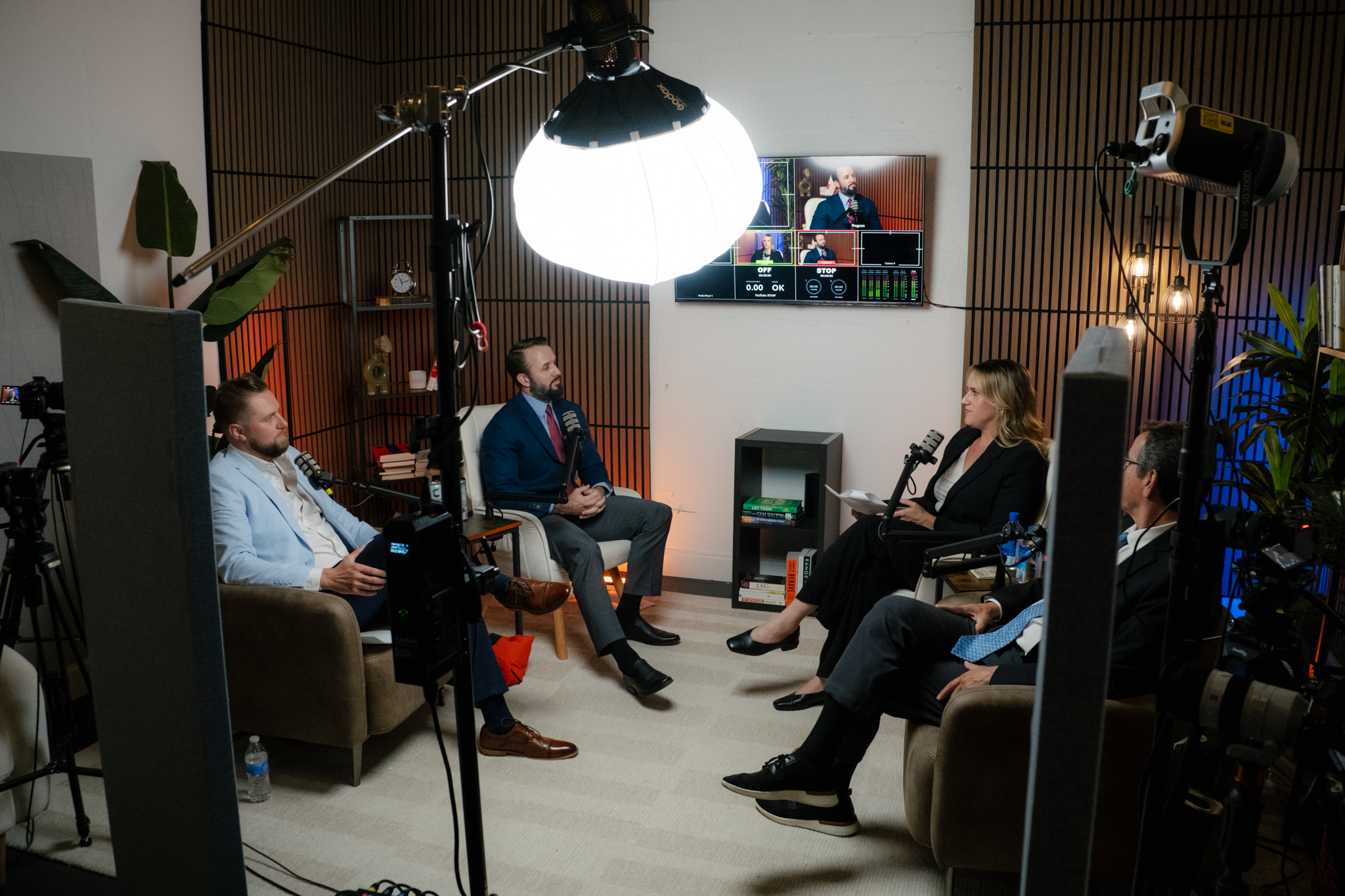
Transcription accuracy depends on the recording. Crosstalk, room echo, and inconsistent microphone levels all produce errors that someone has to fix by hand. Recording in a professional podcast studio with isolated, properly treated tracks for each speaker gives you a transcript that needs far less cleanup. It is one of the quieter reasons a studio recording pays off after the session is over.
Use AI for the First Draft, a Human for the Final
Automated tools produce a solid first pass in minutes. A quick human review catches the details that matter most: proper nouns, numbers, and industry jargon. Budget fifteen to twenty minutes per episode for this step.
Mark Up the Page Correctly
Use real headings, short paragraphs, and descriptive link text. If your site supports it, add podcast episode structured data so search engines can connect the page to the audio. This does not need to be complicated, but it should be consistent from episode to episode.
Video Makes the Transcript Work Harder
If you record on camera, a video podcast studio setup gives you more than clips. The same recording produces the transcript, the chapters, the YouTube captions, and the short-form cuts. One session feeds every search surface at once, which is why many business owners in South Florida podcast circles are moving to video-first recording.
Measure What Changes
Once transcripts are live, watch for movement in a few places: organic traffic to episode pages, the number of long-tail queries you appear for in Google Search Console, and whether AI tools start naming your show or your guests when you test relevant questions. Results compound slowly, so give it a quarter before judging.
The Bottom Line
Your episodes already contain the expertise. Transcripts, chapters, and clean episode pages are how that expertise becomes findable. Start with your next recording: capture clean audio, publish a structured page, and treat the written version as part of the product.
If you are looking for a podcast studio in West Palm Beach that records with search, video, and repurposing in mind, we would be glad to talk it through. Reach out to the Clearview Studio team to plan your first session.
Related Articles



CLEARVIEW
Studio

