Podcast Cross-Promotion in 2026: Why Feed Swaps Are Outperforming Paid Ads


Chasing a bigger ad budget isn't the only way to grow a show anymore. In 2026, podcast cross-promotion — structured feed swaps, trailer trades, and guest exchanges between shows in complementary niches — is quietly outperforming paid placements for a lot of creators. For business owners running a South Florida podcast, that's a meaningful shift: the fastest, cheapest way to reach a genuinely qualified audience isn't a bigger ad spend, it's a smarter partnership.
Why Cross-Promotion Is Beating Paid Growth Tactics
What used to be an informal favor between friendly hosts has become a formal growth channel. Podcast networks and independent creators are now negotiating structured cross-promotion agreements, where shows in adjacent niches systematically introduce each other's audiences on a recurring basis rather than a one-off shoutout. The reason it works is simple: a listener who already trusts one host is predisposed to trust a recommendation from that host, in a way no banner ad or pre-roll spot can replicate.
Feed Swaps Are Outperforming Standard Promo Reads
Some of the biggest gains are coming from full feed swaps — sharing an entire episode or a meaty segment directly into a partner show's feed, rather than a 30-second promo read. Creators and agencies running these swaps report listener conversion rates many times higher than a standard ad read, because the content itself is doing the convincing, not a scripted pitch squeezed between segments.
What a Feed Swap Actually Looks Like
Cross-promotion doesn't require a formal contract or a network deal to get started. The most common formats include:
- Trailer swaps — each host plays a short trailer for the other's show inside an upcoming episode.
- Guest exchanges — hosts appear as guests on each other's shows, which doubles as content and cross-audience introduction.
- Full episode shares — a complete episode or segment gets dropped directly into a partner's feed.
- Host-read recommendations — a genuine, in-voice endorsement rather than a scripted ad.
Picking the Right Partner Shows
The mistake most hosts make is picking swap partners the same way they'd pick guests: by audience size instead of audience fit. A show with a smaller but highly relevant listener base — same industry, adjacent buyer profile, same city or region — will send you far more qualified listeners than a much bigger show with an unrelated audience. Treat your swap list like a prospect list: who already talks to the people you want talking to you?
Why Production Quality Determines Who Wants to Swap With You
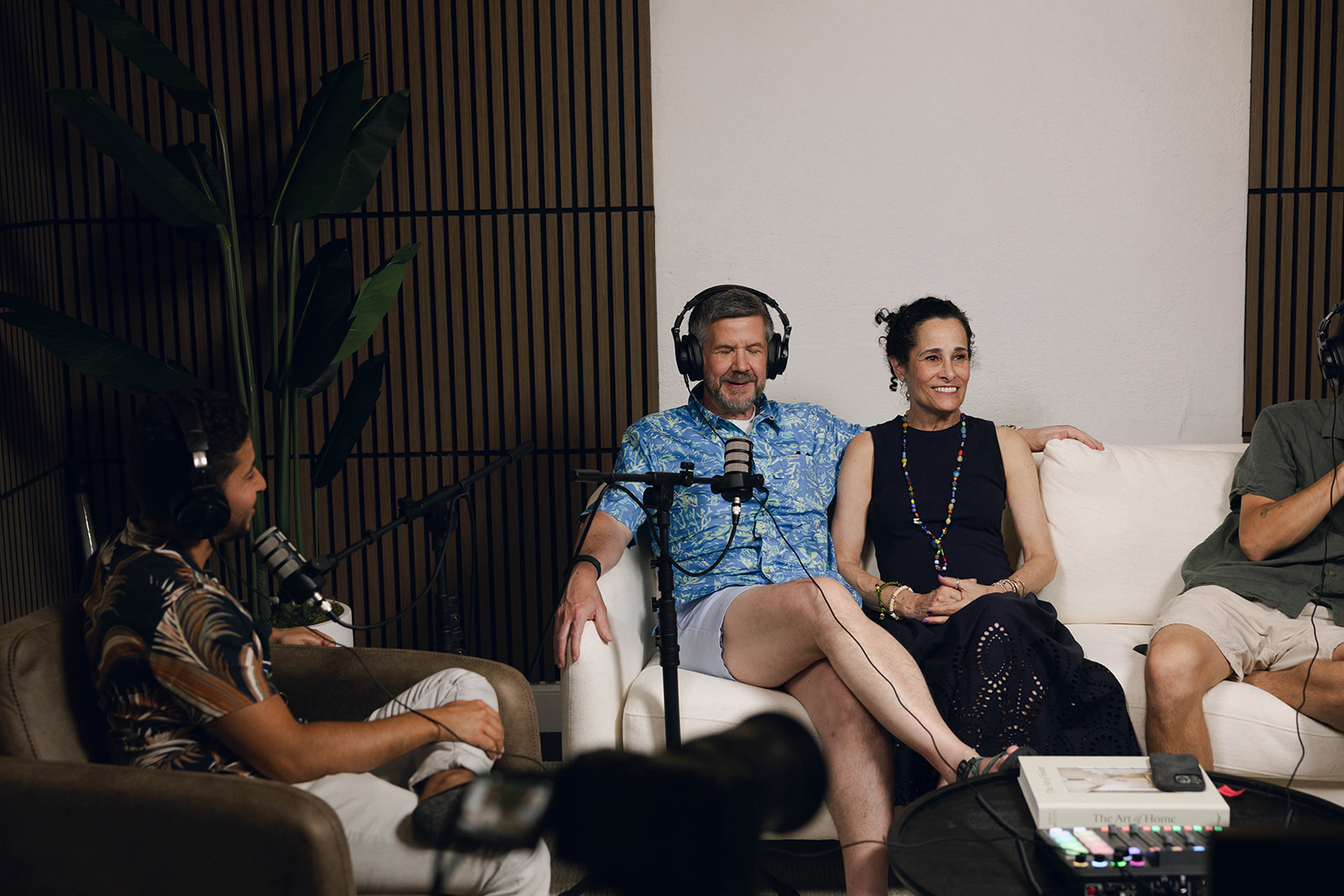
Here's the part that gets overlooked: cross-promotion is a two-way ask, and hosts are selective about whose content they're willing to put in front of their own audience. A show that sounds thin or looks like it was recorded on a laptop mic makes a partner host hesitant to attach their name to it. A show recorded in a professional podcast studio, with clean audio and a real set, reads as an established media property worth vouching for — which makes other hosts far more willing to say yes to a swap.
Video Gives You More to Trade
A video podcast studio setup also expands what you have to offer a swap partner. Instead of just an audio trailer, you can trade a short video clip for their social channels, a co-branded YouTube short, or a full video guest appearance — assets that are far more shareable, and far more likely to get a partner host to reciprocate consistently instead of a single one-off trade.
Finding Partner Shows in South Florida
If you're a business owner searching for a recording studio near me to raise your show's production value before reaching out to potential swap partners, the studio itself is part of the pitch. A podcast studio West Palm Beach creators already trust removes the guesswork from lighting, camera angles, and audio — so every episode you offer up for a swap is one you're proud to put in front of someone else's audience. Local cross-promotion is especially strong for a South Florida show, since partner hosts in the same market often share overlapping referral networks, clients, or industry events, making every swap doubly relevant.
The Bottom Line
As the podcast space gets more crowded, discovery is only getting harder through paid channels alone. Cross-promotion works because it trades on something ads can't buy: an existing relationship of trust between a host and their audience. Build a short list of shows that share your buyer, offer something worth trading, and back it with production quality that makes other hosts want to be associated with your show.
Ready to build a show worth swapping episodes over? Book a session at Clearview Studio and let's talk about a production setup that makes every partnership pitch an easy yes.
Related Articles

(1).jpeg)


CLEARVIEW
Studio

